How cosmetics merchants can use Combos
A practical merchandising guide for selling flexible beauty routines without making fulfillment harder.
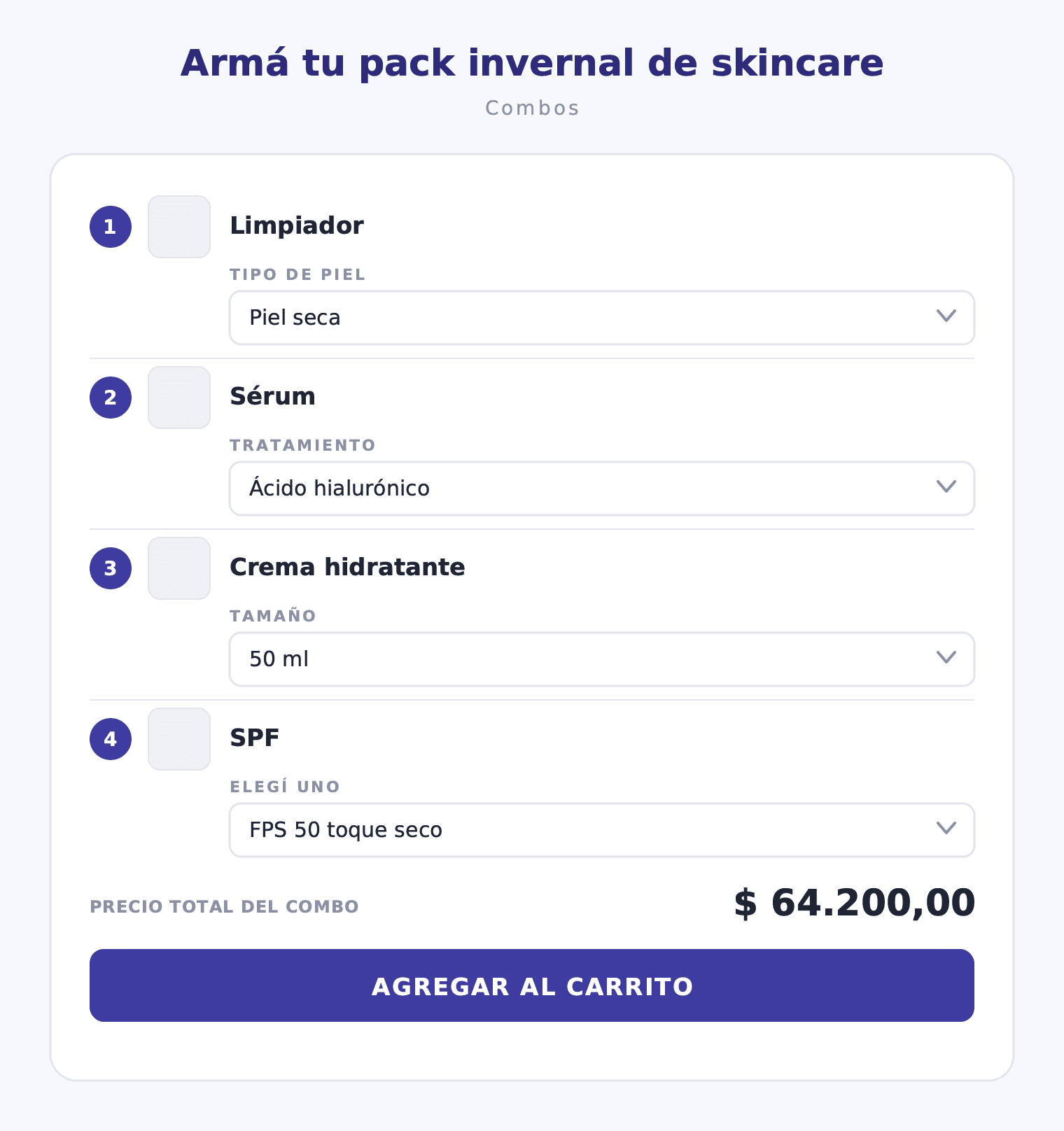
Combos are a good fit for cosmetics because shoppers often want choice, but not an empty catalogue page. They may know they need a routine, a gift, or a new look, but still want control over the shades, finishes, scents, or skin type options.
For a cosmetics merchant, the goal is not to bundle random products together. The goal is to guide the shopper toward a complete purchase while keeping enough flexibility for personal preference.
How it works
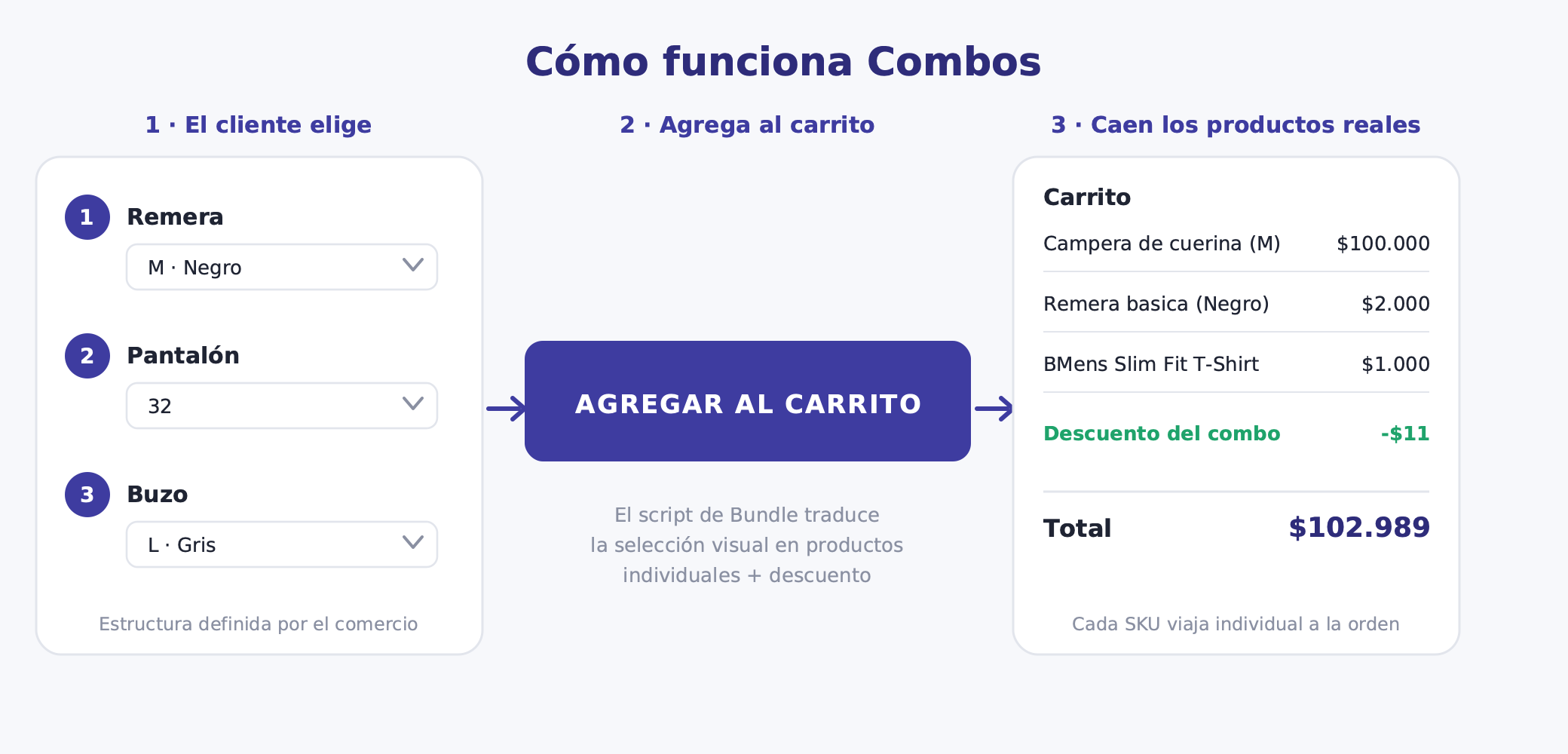
Bundle's script injects a selector on the product page with numbered slots. The customer fills each one — cleanser, serum, moisturizer, SPF — and when done, adds the bundle to the cart with the configured price or discount.
What matters: when they add, the individual products land in the cart with their own SKU and variant, plus a separate discount line. No artificial bundle product. That keeps fulfillment, third-party warehouses (Full), and accounting clean: every order line is a real product with its own SKU, no mapping needed, no friction in tools like Contabilium.
What are Combos?
Combos lets the merchant define a bundle structure, then lets the customer choose which products fill that structure. Instead of selling one fixed kit with the same products for everyone, the store offers a guided set of choices.
For example, a cosmetics store might create a "complete skincare routine" bundle where the customer must choose:
- One cleanser.
- One serum.
- One moisturizer.
- One SPF.
The merchant decides which products are allowed in each part of the bundle. The customer decides which specific products or variants they want. Once the required choices are complete, the bundle can be added to the cart with the configured price or discount.
This is different from a simple product bundle where every shopper receives the exact same items. Combos is more flexible, which matters in cosmetics because shoppers often need products that match their skin type, shade, finish, or scent preference.
What are slots?
Slots are the positions inside the bundle that the shopper needs to fill. Each slot represents a role in the final set.
In a skincare routine, the slots could be:
| Slot | Role in the bundle |
|---|---|
| Cleanser | Starts the routine and matches the shopper's skin type. |
| Serum | Adds the treatment step, such as hydration or brightening. |
| Moisturizer | Completes the core routine. |
| SPF | Adds daily protection and increases the value of the basket. |
Each slot can have its own product list. The cleanser slot should only show cleansers. The SPF slot should only show SPF products. This keeps the shopping flow clear and prevents invalid combinations.
Slots also make the bundle easier to operate. The merchant can control the minimum or maximum number of items, decide whether a slot is required, and replace products in one slot without rebuilding the whole offer.
Why use Combos?
Combos are useful when the merchant wants to increase order value without forcing every customer into the same kit.
The main advantages are:
- More relevant baskets: shoppers can choose products that fit their skin type, tone, or preferences.
- Higher average order value: the bundle gives customers a reason to buy a complete routine instead of one item.
- Better product discovery: customers are exposed to complementary products they may not have considered.
- Clearer merchandising: the merchant can guide customers through a buying journey instead of leaving them to browse a large catalogue.
- Safer operations: product groups and slots keep the offer controlled, even when the customer has flexibility.
- Easier campaigns: seasonal edits, gift sets, travel kits, and replenishment offers can reuse the same bundle structure.
For cosmetics, this balance is important. A fixed bundle can feel too rigid, but a completely open "choose anything" offer can feel messy. Slots give the merchant enough control while still making the bundle feel personal.
Build bundles around a beauty use case
Start with the reason the customer is buying. Cosmetics bundles work best when every slot in the bundle has a clear role.
Useful bundle ideas include:
- A skincare routine: cleanser, serum, moisturizer, and sunscreen.
- A makeup look: foundation, blush, mascara, and lip product.
- A travel kit: mini cleanser, moisturizer, perfume, and SPF.
- A gift set: hand cream, lip balm, fragrance, and cosmetic bag.
- A replenishment bundle: buy any three daily-use essentials.
This keeps the offer easy to understand. The shopper is not choosing from the whole store; they are choosing within a structured routine.
Use slots to control the experience
A strong cosmetics Combos bundle should limit each choice to products that make sense for that slot. For example, a "build your glow routine" bundle could have:
| Slot | Customer choice |
|---|---|
| Cleanse | Choose one cleanser for your skin type. |
| Treat | Choose one serum or treatment. |
| Hydrate | Choose one moisturizer. |
| Finish | Choose one SPF, mist, or primer. |
This protects the shopping experience and the operation. Customers get flexibility, but the merchant still controls which products can be combined.
Match variants to real buying decisions
Cosmetics products often have many variants. Do not make the customer navigate every possible option at once.
Use variant choices where they matter:
- Shade for foundation, concealer, blush, lipstick, and brow products.
- Skin type for cleanser, serum, moisturizer, and SPF.
- Finish for matte, satin, gloss, shimmer, or dewy products.
- Scent for fragrance, body care, and bath products.
If a product has many shades, keep the bundle category narrow. A lip bundle with five lipstick families is easier to shop than a bundle that mixes lip, face, eye, and skincare products with every variant exposed at once.
Pick a discount that supports margin
Cosmetics margins vary by product type and brand, so the discount should fit the bundle's purpose.
Good starting points are:
- A small percentage discount for routine builders.
- A fixed amount off when the shopper reaches a required number of items.
- A free low-cost item when the shopper completes a higher-margin bundle.
- No discount for curated discovery sets where convenience is the main value.
Avoid over-discounting hero products that already convert well. Use the bundle to increase basket size, introduce complementary products, or move seasonal inventory without training customers to wait for deep discounts.
Keep stock risk visible
Beauty bundles can fail operationally when one popular shade or skincare variant sells out. That creates a poor customer experience and can break a campaign that otherwise performs well.
Before launching, check:
- Whether every required slot has enough available products.
- Whether popular shades have enough inventory for the campaign period.
- Whether replacement products can be added quickly.
- Whether low-stock products should be excluded from the bundle.
Combos works best when the customer always has a valid path to complete the bundle.
Start with one simple campaign
A good first campaign for a cosmetics merchant is a routine builder with three or four slots.
For example:
| Bundle | Rule |
|---|---|
| Build your everyday makeup kit | Choose one base, one cheek product, one eye product, and one lip product. |
| Skincare routine builder | Choose one cleanser, one treatment, one moisturizer, and one SPF. |
| Travel beauty essentials | Choose any four minis from approved travel-size products. |
Launch it with a clear landing page, place it near related product pages, and measure whether customers complete the bundle without support.
Build a winter skincare pack
Winter is a natural opportunity for a seasonal skincare bundle: skin needs more hydration, customers are looking for more complete routines, and seasonal gift sets practically sell themselves. A winter pack works well with four well-defined slots.
| Slot | Role | Choice |
|---|---|---|
| Cleanser | Routine foundation | By skin type |
| Serum | Treatment | Hyaluronic acid / vitamin C |
| Moisturizer | Intense winter hydration | Size |
| SPF | Daily protection | SPF 50 |
The customer picks the cleanser for their skin type and the serum for their goal (deep hydration or brightness), while the moisturizer and SPF can have narrower options. That limits decision friction without removing personalization where it matters most.
Launch it at the start of the cold season, link it from your top-selling winter product pages, and track whether the bundle average order value beats the same products bought separately.
How to set it up in Bundle
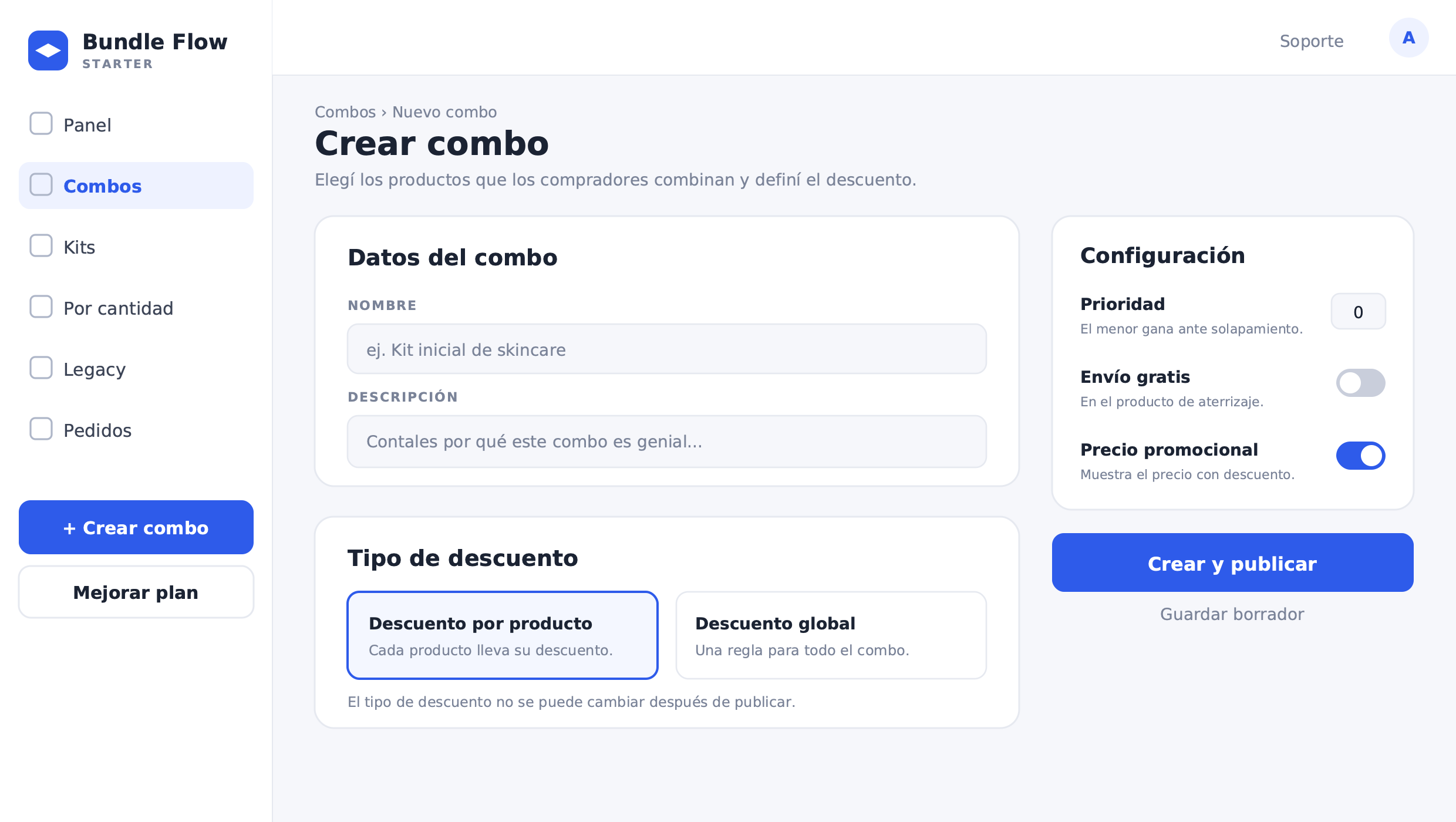
In the Bundle panel, go to Combos → Create bundle. The module is in BETA.
- Details: enter the bundle name (e.g., "Winter skincare pack") and the description the shopper will see.
- Discount type: Per-product discount (each component carries its own discount) or Global discount (one rule for the whole bundle). ⚠️ This cannot be changed after publishing.
- Components: use "Add product" to add the cleanser, serum, moisturizer, and SPF. For each one, configure:
- Quantity.
- Variants: if the SPF is always the same product, set variants to Locked (fixed slot). If the cleanser has skin-type options, define the Allowed variants (dry / oily / combination).
- Per-item discount if you chose "per-product."
- Settings: set the bundle priority, free shipping, and promotional price (to show the discounted price on the landing product page).
- Landing product and preview: select the product where the selector will appear. "Selector preview" shows the slots as the shopper will see them.
- Publish: "Create and publish" or "Save as draft." You can pause or resume at any time. While paused, the selector is hidden and discounts do not apply.
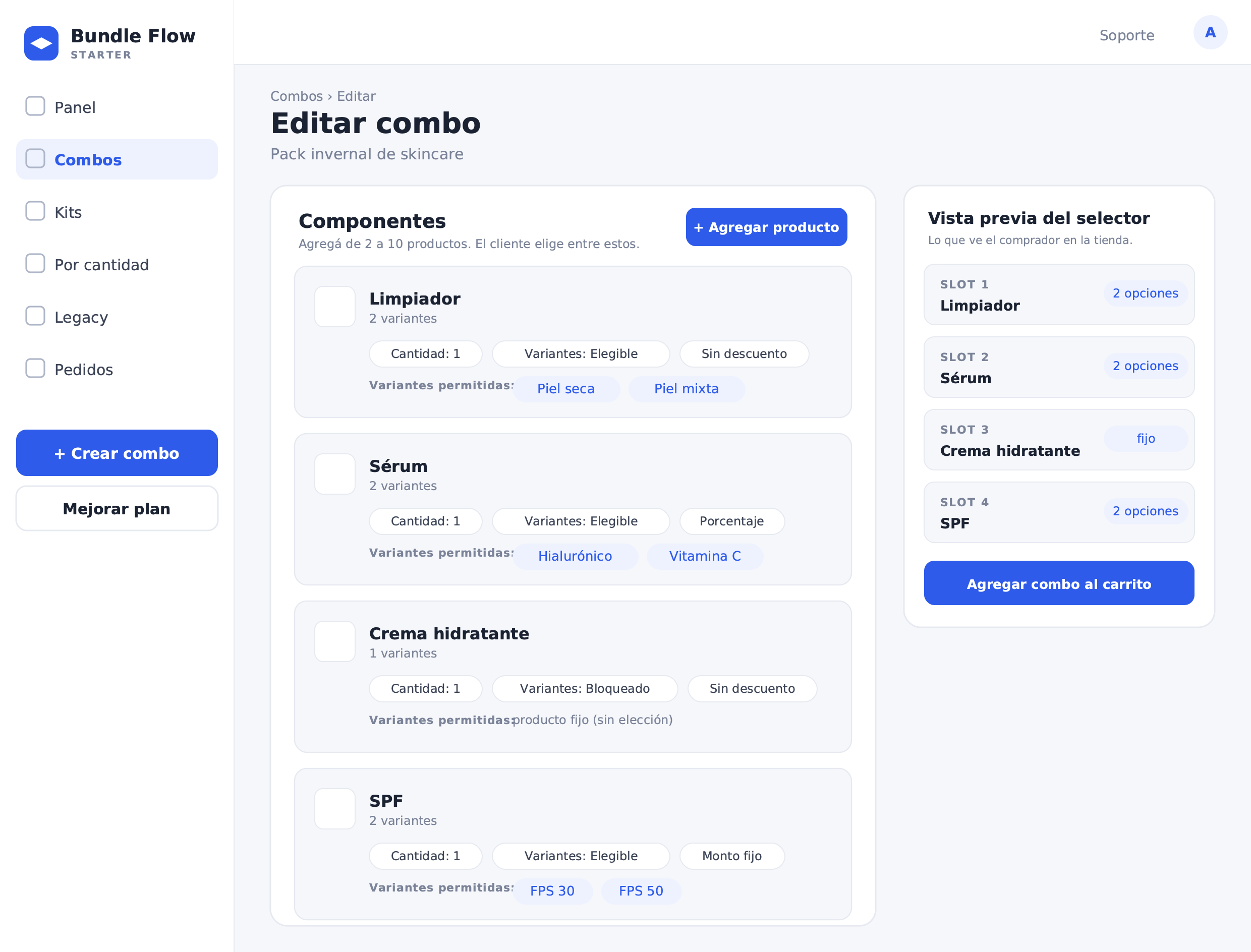
Each component in the panel equals one slot in the storefront selector. Locked variants = fixed slot. Allowed variants = what the customer chooses in that slot.
Measure more than revenue
Revenue matters, but it is not the only signal. A cosmetics bundle should also improve the quality of the basket.
Track:
- Average order value.
- Bundle conversion rate.
- Attach rate for complementary products.
- Inventory pressure on popular variants.
- Returns or exchanges caused by unclear shade or product choices.
If shoppers build the bundle but abandon before checkout, the offer may be too complex. If they complete it but support tickets increase, the product choices or variant labels may need tightening.
What good looks like
A strong cosmetics Combos bundle feels curated, not restrictive. The customer understands the routine, picks the products that fit them, and reaches checkout with a basket that is larger and more intentional than a single product purchase.
For the merchant, the best bundle is also easy to operate: clear slots, controlled product groups, simple discount rules, and enough stock coverage to keep the offer reliable.